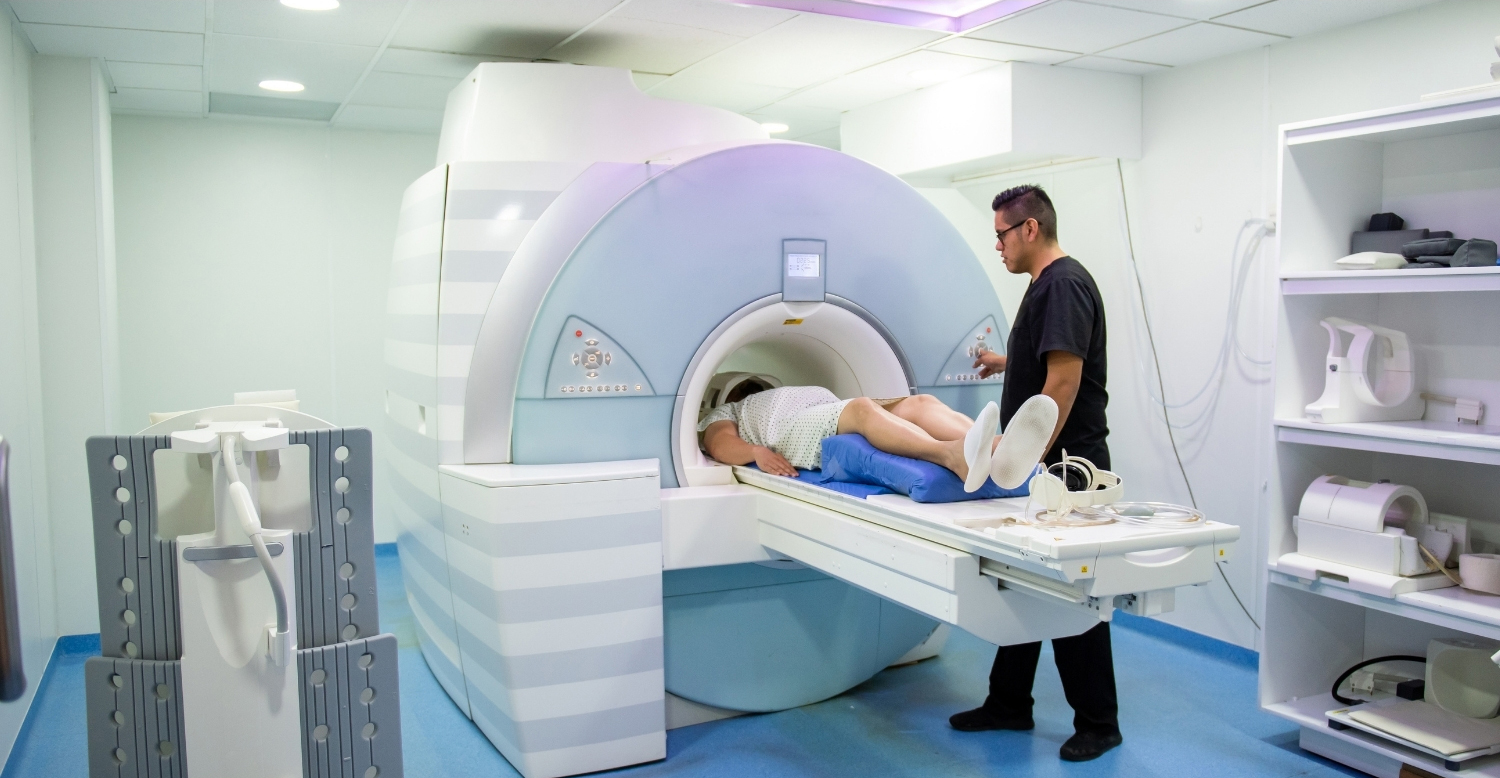
Patient laying on table in front of a positron emission tomography scanner

Coming Spring 2027

The Nuclear Medicine and Molecular Imaging program will begin in Spring 2027. Learn more about the program by attending an information session.

Turn science into impact

Nuclear Medicine and Molecular Imaging is a specialized healthcare profession that uses radioactive materials, advanced imaging technology, and molecular techniques to diagnose, evaluate, and treat disease at the cellular level. 


Our program offers hands-on clinical experience and training with advanced imaging equipment that will prepare you for a career as a certified nuclear medicine technologist working in hospitals, imaging centers, and specialty clinics.

Email Us to Learn More   Apply Today

Information Sessions

Information sessions give prospective students an overview of the Nuclear Medicine and Molecular Imaging program including the admissions process, curriculum and degree plan, clinical requirements, program expectations, and career outlook.

In-Person

Location: Collin College Frisco Campus (specific room details will be provided upon registration)
Time: 4–5 p.m.
Dates:
  • Thursday, Sept. 3
  • Thursday, Oct. 1
  • Thursday, Nov. 5
RSVP Required: Please email attendance to tjones2683@collin.edu
Join an Information Session

Virtual

Platform: Zoom (link provided upon RSVP)
Time: 5–6 p.m.
Dates:
  • Tuesday, Sept. 1
  • Tuesday, Oct. 6
  • Tuesday, Nov. 3
RSVP Required: Please email attendance to tjones2683@collin.edu
Join a Virtual Information Session

Degree Overview

The Nuclear Medicine and Molecular Imaging program at Collin College leads to an Associate of Applied Science (AAS) degree designed to prepare you for entry-level positions in the field of nuclear medicine. The program combines comprehensive classroom instruction with hands-on laboratory and clinical experiences, allowing you to develop the knowledge, technical skills, and professional competencies required in modern healthcare settings.


Over the course of four semesters (approximately 15 months), you will receive training in patient care, radiation safety, imaging procedures, radiopharmaceuticals, and advanced molecular imaging technologies. Clinical rotations at affiliated healthcare facilities provide real-world experience under the supervision of qualified professionals.


Upon successful completion of the program, you will be eligible to apply for national certification examinations through the American Registry of Radiologic Technologists (ARRT) (N) and the Nuclear Medicine Technology Certification Board (NMTCB), preparing you for employment and continued professional growth in the field.
Associate of Applied Science

Admission and Application Requirements

Application Process


Step 1: Learn About the Program
  • Review the Nuclear Medicine and Molecular Imaging (NMMI) program website
  • Attend a required NMMI program information session
Step 2: Complete Prerequisite Courses

Applicants must complete the following prerequisite courses with a grade of C or higher:

  • BIOL 2401 – Anatomy & Physiology I
  • BIOL 2402 – Anatomy & Physiology II
  • College Algebra (or a higher-level mathematics course)
  • Physics for Allied Health (or a higher-level college physics course)


Step 3: Submit Your Application
  • Applications are accepted annually from Sept. 1-Nov. 1.
  • Submit a completed application packet to the program director at tjones2683@collin.edu.


Complete Application Packet Requirements

A completed application packet must include:

    • Official college transcripts
    • Certificate of attendance from the NMMI program information session
    • Current Basic Life Support (BLS) certification from the American Heart Association
    • Documentation of all required immunizations 


Important Notes
    • Incomplete applications will not be considered for admission.
    • All prerequisite courses must be completed with a grade of C or higher prior to program entry. 

The Nuclear Medicine and Molecular Imaging program utilizes a selective admission process. Meeting minimum admission requirements does not guarantee acceptance into the program. Applicants are ranked according to the selective admission point system, and admission offers are extended to the highest-ranked applicants based on available program capacity and clinical placement availability.


Selective Admission Point System

Category Max Points
Overall GPA 10
BIOL 2401 – Anatomy and Physiology I 5
BIOL 2402 – Anatomy and Physiology II 5
College Algebra 5
Physics 5
Additional Gen Ed Courses 4
Academic Honors and Recognition  5
Degree Completion 6
Program Readiness 5
Total 50

Overall College Grade Point Average (GPA) - Maximum 10 Points

GPA Points
3.75-4.00 10
3.50-3.74 8
3.25-3.49 6
3.00-3.24 4
2.50-2.99 2

Prerequisite Course Grades - Maximum 20 Points

  • BIOL 2401 – Anatomy & Physiology I
  • BIOL 2402 – Anatomy & Physiology II
  • College Algebra (or a higher-level mathematics course)
  • Physics for Allied Health (or a higher-level college physics course)
Grade Points
A 5
B 3
C 2

Additional General Education Coursework - Maximum 4 points

Applicants receive one (1) point for each completed course:

  • CHEM 1406
  • ENGL 1301
  • Humanities/Fine Arts Elective
  • Social/Behavioral Sciences Elective


Academic Recognition

Recognition Points
Dean's List 1
Cum Laude 2
Magna Cum Laude 3
Summa Cum Laude 5

Degree Completion - Maximum 6 Points

Degree Earned Points
Associate Degree 2
Bachelor's Degree 4
Master's Degree or Higher 6

Program Readiness - Maximum 5 points

Requirement Points
Attendance at required NMMI Information Session 3
Academic Honors and Recognition 2
Only the highest level of recognition will be awarded. Points are not cumulative.


Additional Program Information

The Nuclear Medicine and Molecular Imaging program at Collin College is a new program seeking initial accreditation from the Joint Review Committee on Educational Programs in Nuclear Medicine Technology.


Accreditation is a multistep process that includes submission of program documentation and completion of a site visit. The program will be actively engaged in the initial accreditation review process; however, accreditation is not guaranteed prior to the graduation of the first cohort.

Accepted students must complete the following before beginning clinical rotations:

  • Criminal background check
  • 10-panel drug screen
  • Required immunizations
  • Annual tuberculosis screening
  • American Heart Association Basic Life Support (BLS) certification
  • Personal health insurance coverage


You are also responsible for transportation to and from all assigned clinical sites.

Upon admission to the Nuclear Medicine and Molecular Imaging program, you will be required to take a criminal background check. Please be aware that acceptance to the program and placement at a practicum site does not guarantee you will be allowed to become a certified nuclear medicine technologist.  


For more information, contact the Nuclear Medicine and Molecular Imaging Program Director, the American Registry of Radiologic Technologist (ARRT), or the Nuclear Medicine Technology Certification Board (NMTCB).

The following represents the estimated costs associated with the Nuclear Medicine and Molecular Imaging (NMMI) program and does not include prerequisite coursework. In addition to tuition, fees, textbooks, and required supplies, you should anticipate additional program-related expenses, including but not limited to uniforms, immunizations, health screenings, credentialing requirements, and other clinical compliance costs.


You are responsible for all program-related expenses. Please note that some clinical affiliates may require additional background checks and/or drug screening beyond those required by Collin College. Any costs associated with these requirements are your responsibility.


Visit the Tuition and Fees page for the most up-to-date information regarding tuition.

Expense Category Estimated Cost
Tuition/Fees (60 program credits) $4,020
Textbooks $795
Background Check $60
Drug Screen $29
Liability Insurance $44
Immunization Tracker $120
Uniforms $150
NMTCB Certification Examination Fee $200
ARRT (N) Certification Examination Fee $200
Estimated Total Program Cost $5,618

Important Notes

  • All costs are estimates and subject to change without notice.
  • Tuition is based on the current Collin County resident rate of $67 per credit hour.
  • Students should budget for additional personal expenses not included in the estimate.
  • Clinical requirements and certification fees are subject to change based on external agencies.

Current tuition and fee information is available on the Tuition and Fees webpage.

After acceptance and before entering clinical rotations, you will be required to provide acceptable immunization records. Due to the time needed to complete certain vaccination series, please verify records at the time of application. If not completed previously, it is recommended that the Hepatitis B series be started at the time of application. The Texas Administrative Code (TAC) and the Dallas-Fort Worth Hospital Council Foundation Community Standards require that all students in health programs complete required immunizations. Accepted students are required to provide documentation that they have completed all immunization requirements. Immunizations for students are based on the current Centers for Disease Control recommendations for health professionals.

Vaccine Requirement
Mumps, Measles, Rubella Two vaccinations or titer test showing immunity
Varicella (chickenpox) Vaccination or titer test showing immunity
Tetanus/Diphtheria/Pertussis Vaccination/booster within the past 10 years
Hepatitis B Vaccination consists of a three-dose series over a seven-month period. A titer test showing immunity is also acceptable. Accelerated dosing schedules are available, but it is your responsibility to seek facilities with this option. 
Meningitis* You are exempt if you are over the age of 22. If you do not meet the exemptions or exceptions, you will need to provide a physician-signed or stamped form that shows the month, day, and year the vaccination dose or booster was administered. You must have been vaccinated during the five-year period immediately preceding and at least 10 days prior to the first day of class.
Influenza** One dose is required annually during flu season. Exceptions are made for medical and religious reasons but must adhere to hospital policies. 
Negative Tuberculin (TB) Test** TB tests are required annually, either as a negative QFT or CXR test. If you have a history of a positive PPD test or having had TB, you must provide documentation of a negative CXR or completed treatment. Students with expired TB tests will not be allowed to attend clinicals and will receive unexcused absences until results are submitted. You are responsible for understanding the attendance policy for clinicals.
*Please submit your meningitis vaccination record to the Admissions and Records Office (hand delivery, fax 972.548.6702, or scan and email to admissions@collin.edu). Include your full name, date of birth, and CWID. 
**To be completed after acceptance.

The costs of these tests and immunizations are your responsibility. Select clinical sites may request additional immunization requirements.


Information on immunizations can be accessed by visiting the Centers for Disease Control and Prevention (CDC) website.

You are required to carry personal health insurance while in the clinical portion of the Nuclear Medicine and Molecular Imaging program. Proof of insurance must be made available to the director before clinical rotations.


You should be aware that eligibility for health insurance on your parent or guardian’s health insurance may require you to be a full-time enrolled student. The number of semester credit hours in which you must be registered to be considered full-time is defined by Collin College. Check with the college registrar’s office to see if you qualify as a full-time student.

Mission Statement

The mission of the Nuclear Medicine and Molecular Imaging Program at Collin College is to provide a student-centered education that prepares graduates for excellence in healthcare. Through a curriculum that combines advanced imaging technology with hands-on clinical training, the program promotes academic achievement, ethical practice, and critical thinking.


Program Goals and Educational Outcomes

  • Graduates will perform nuclear medicine procedures in accordance with established protocols.
  • Graduates will communicate effectively with patients and healthcare professionals.
  • Graduates will demonstrate safe, patient-centered care in clinical practice.
  • Graduates will engage in professional development activities.

Students enrolled in the Nuclear Medicine and Molecular Imaging (NMMI) program must be able to meet the following technical standards, with or without reasonable accommodations, to successfully complete program requirements and perform the essential functions of a nuclear medicine technologist in classroom, laboratory, and clinical settings.

Category
Physical Requirements
Stand and walk for prolonged periods during clinical procedures and patient care activities
Lift, transfer, move, and position patients and/or equipment weighing up to 50 pounds
Perform cardiopulmonary resuscitation (CPR) and other emergency response procedures
Manipulate catheters, guidewires, imaging equipment, and other procedural instruments with precision
Demonstrate fine motor skills, manual dexterity, and hand-eye coordination necessary for invasive cardiovascular procedures
Reach, bend, stoop, and move safely in confined procedural environments
Use lead protective equipment as needed during clinical procedures
Maintain physical stamina necessary to participate in lengthy procedures that may extend several hours
Sensory Requirements
Observe patient conditions and recognize changes in physical, emotional, and physiological status
Distinguish audible alarms, patient responses, and other critical sounds in the clinical environment
Read and interpret patient monitors, imaging displays, procedural equipment screens, and hemodynamic data
Differentiate colors, visual indicators, and waveform patterns used in patient monitoring and diagnostic equipment
Assess patient responses through visual, auditory, and tactile observation
Communication Requirements
Communicate effectively, accurately, and professionally with patients, families, faculty, clinical instructors, physicians, and healthcare team members
Accurately document patient information, procedural data, and clinical activities in written and electronic formats
Follow verbal, written, and electronic instructions
Provide and receive information effectively in routine, urgent, and emergency situations
Behavioral Requirements
Demonstrate emotional stability and professionalism when providing patient care and participating in invasive procedures
Exercise sound judgment and maintain patient safety in all settings
Maintain integrity, ethical behavior, confidentiality, and accountability for actions
Function effectively and safely under stressful, fast-paced, and potentially emergent conditions
Adapt to changing environments, patient conditions, and clinical situations
Demonstrate professional behavior and respect for the dignity, rights, and individuality of all patients, faculty, staff, and healthcare team members

Note: Students must be able to meet these technical standards with or without reasonable accommodations. Requests for accommodations should be directed to the college’s Disability Services Office in accordance with college policy and applicable federal and state laws.

For program information, please contact:

Tonya Jones, MS, CNMT

Program Director of Nuclear Medicine and Molecular Imaging

Collin College Frisco Campus 

tjones2683@collin.edu

972.377.1644

Visit the academic advising, admission, and financial aid webpages for more information.

Frequently Asked Questions

The professional portion of the program consists of four semesters (approximately 15 months). Students complete approximately 1,050 clinical hours during the program.

Employment is not prohibited; however, you should carefully consider the demands of the program.

Clinical rotations, coursework, laboratory assignments, and studying require a significant time commitment. Student success should remain the highest priority.


You may not be paid for scheduled clinical hours or complete clinical competencies at their place of employment.

Clinical education begins during the first semester of the program. Students complete approximately 1,050 hours of clinical training throughout the four-semester curriculum at affiliated hospitals and imaging centers throughout the Dallas-Fort Worth area.

If your Anatomy & Physiology coursework is more than five years old, you should contact the program director for guidance regarding eligibility and possible course requirements.

Chemistry courses may be considered for substitution if they:

  • Include a laboratory component
  • Carry at least four semester credit hours
  • Receive approval through the Collin College transcript evaluation process


Consult an academic advisor and submit official transcripts for review.

Higher-level physics courses may be considered as substitutes for Physics for Allied Health, subject to review and approval through the Collin College transcript evaluation process.

Yes. Students who are currently enrolled in prerequisite or required general education courses are encouraged to apply to the program. During the application process, you should indicate that you are "currently enrolled" in any prerequisite or general education courses that have not yet been completed.


If coursework is being completed at another institution, you are responsible for ensuring that an official transcript is submitted to the program director within 15 days of the end of the semester. If coursework is being completed at Collin College, the program director will have access to your final grades and transcripts.


All prerequisite requirements must be successfully completed before enrollment in the Nuclear Medicine Technology program.

Yes. Many college credits transfer to Collin College. You should submit official transcripts as early as possible. The college will evaluate previous coursework and determine transfer credit eligibility. Because transcript evaluations can take time, early submission is strongly encouraged.

The program requires Basic Life Support (BLS) for Healthcare Providers certification through the American Heart Association (AHA). CPR certifications from other organizations may not be accepted. You are required to obtain AHA certification before beginning clinical education.

Applications are reviewed following the Nov. 1 deadline. The program director and clinical coordinator evaluate applicants and determine admission decisions in December. Acceptance notifications are typically sent during December. Applicants who are not selected will also receive notification regarding their admission status.

No. Because the curriculum includes laboratory instruction and clinical education, you must attend classes and clinical rotations in person.

Yes. Nuclear medicine technologists are expected to obtain professional certification after graduation in order to practice in the field. Upon successful completion of the program and satisfaction of all eligibility requirements, graduates may be eligible to pursue certification through the American Registry of Radiologic Technologists (ARRT) and/or the Nuclear Medicine Technology Certification Board (NMTCB), depending on program accreditation status and certification pathway requirements. Students planning to practice in Texas must also meet the requirements established by the Texas Medical Board for state licensure.

Contact Us

If you have any questions, please contact:

Tonya Jones, MS, CNMT

Program Director of Nuclear Medicine and Molecular Imaging

Collin College Frisco Campus 

tjones2683@collin.edu

972.377.1644